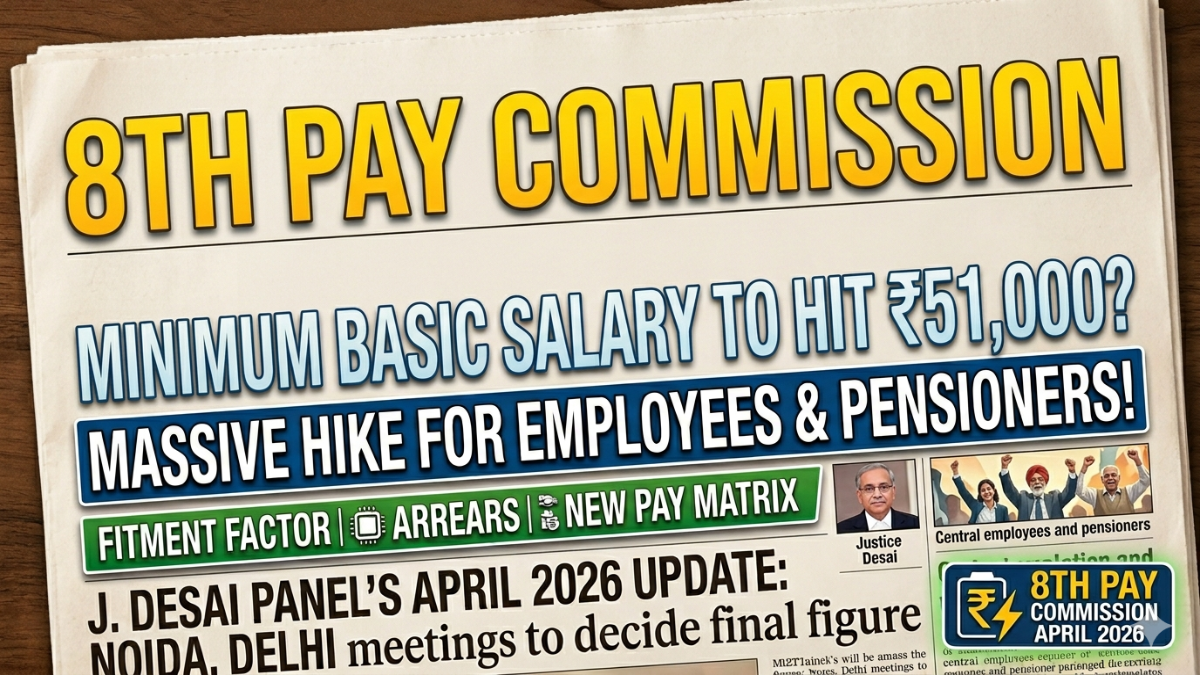
The wait for millions of central government employees and pensioners is finally nearing its climax. As of April 2026, the 8th Pay Commission (8th CPC) has moved past the stage of mere office whispers and into active, on-ground implementation. With the 7th Pay Commission’s lifecycle officially drawing to a close, the focus has shifted entirely to how the new pay structure will tackle the post-inflation economy. This isn’t just about a small annual increment; it is a massive overhaul aimed at bridging the gap between current earnings and the rising cost of living in cities like Noida, Delhi, and beyond.
The Current Status of the Commission
To give you a clear update on where things stand today, the commission, chaired by Justice Ranjana Prakash Desai, has officially kicked off its consultation phase. High-level meetings are already scheduled for late April and early May 2026 in New Delhi and Pune. This is a critical stage where employee unions and stakeholders present their demands to the board. While the official reference date for the 8th Pay Commission is January 1, 2026, the actual rollout takes time. However, the good news for employees is that the “arrears” clock is already ticking.
The Fitment Factor Debate
The biggest buzzword in government corridors right now is the Fitment Factor. This is the mathematical multiplier used to convert your current basic pay into the new 8th CPC scale. Under the previous commission, this was set at 2.57, but in 2026, the demand is much higher. Employee unions are pushing for a fitment factor between 2.86 and 3.25. If the government settles on the higher end of this range, we could see the minimum basic pay—which is currently ₹18,000—skyrocket to anywhere between ₹41,000 and ₹51,000. This jump would fundamentally change the financial status of lower- and middle-level staff.
DA Merger and Salary Calculations
Another significant shift we are witnessing this April is how Dearness Allowance (DA) is being handled. With inflation numbers staying high, experts predict that the DA will touch the 70% mark by the time the final 8th CPC report is submitted. There is a strong likelihood that this DA will be merged into the basic pay to reset the inflation buffer. For a middle-level officer currently earning a basic pay of ₹50,000, a potential 3.0 fitment factor combined with the DA merger could push their new base salary well above ₹1,50,000 per month.
Good News for India’s Pensioners
It is not just the active workforce that is looking at a windfall; the pensioners are in for a substantial boost as well. The 8th Pay Commission is expected to bring a major revision to the minimum pension. Currently standing at ₹9,000, expectations are that it will be revised to at least ₹20,000 to ₹25,000. For senior citizens who have been struggling with rising healthcare costs and the general price hike of essential goods, this revision will provide much-needed relief and financial dignity in their post-retirement years.
Timeline and the Concept of Arrears
The most common question being asked is: “When will the money reach my account?” While the effective date is January 2026, the commission usually takes about 18 months to finalize and submit its report. Realistically, the actual implementation—the moment the new salary hits your bank account—is likely to happen in late 2026 or early 2027. However, you shouldn’t worry about the delay. The Indian government typically pays out arrears, meaning you will receive a lump-sum payment covering the difference from January 2026 up until the month of implementation.
Preparing for the Digital Rollout
Lastly, it is important to note that the 8th Pay Commission is leaning heavily on digital transparency. From feedback sessions on the “MyGov” portal to the digital tracking of service records, the process is more high-tech than ever before. For central employees, this means ensuring your service books are updated and your bank details are perfectly synced with your PRAN/PAN. As the commission continues its city-wise visits through the end of this month, staying informed is the best way to prepare for what is set to be the biggest financial upgrade in a decade.