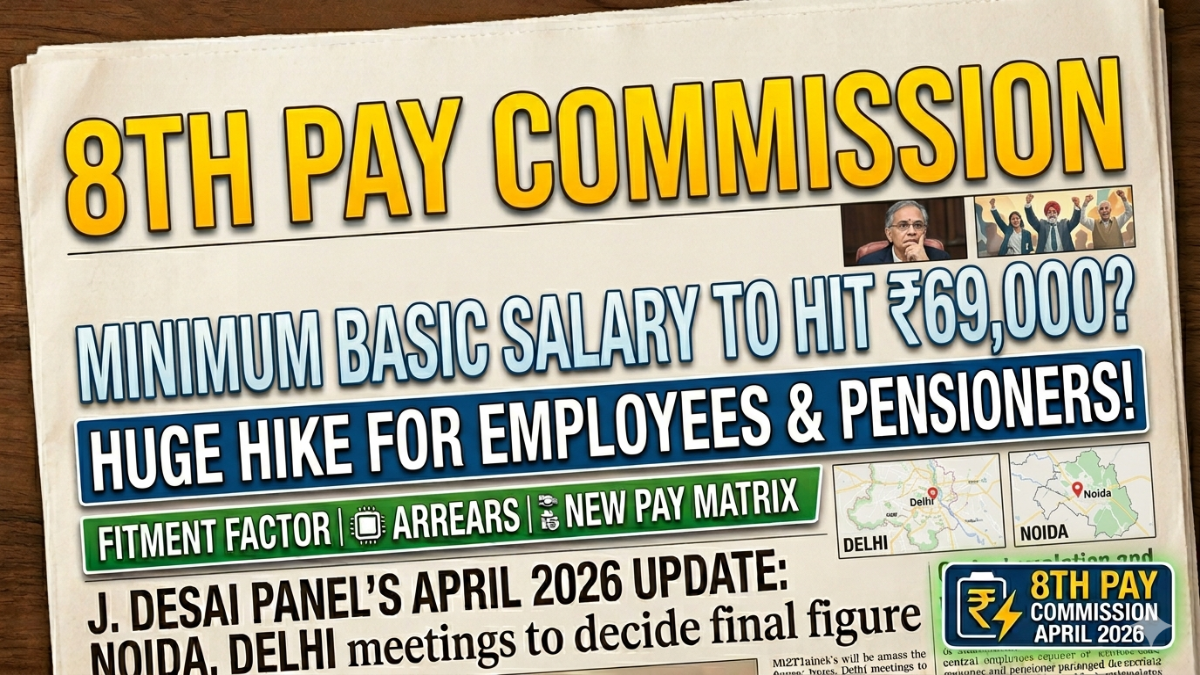
If you are a central government employee or a pensioner, your April 2026 has just become much more interesting. The whispers about the 8th Pay Commission (8th CPC) have finally turned into formal invitations and scheduled meetings. As the cost of living continues to climb, everyone—from junior staff to retired veterans—is looking at the commission with high hopes. But what is actually happening behind the closed doors of New Delhi? Let’s dive into the reality of the 8th Pay Commission as it stands today.
The Current Scene: Meetings in Delhi and Pune
The biggest news right now is that the consultation phase has officially kicked off. The 8th Pay Commission, headed by Justice Ranjana Prakash Desai, is moving fast. Just this week, notices were issued for high-level interaction sessions. The commission is scheduled to meet with various unions and associations in New Delhi on April 28, 29, and 30, 2026. Following this, they will head to Pune on May 4 and 5.
These aren’t just routine visits; they are the first real chance for employee representatives to voice their demands directly. The commission has even invited consultants on a contractual basis to speed up the process of analyzing the massive amount of data being submitted by departments across the country.

The “₹69,000” Demand: More Than Just a Number
The most talked-about figure right now is ₹69,000. The National Council (JCM) and various employee bodies have submitted a detailed memorandum demanding that the minimum basic pay be raised to this level. Currently, under the 7th Pay Commission, the minimum salary starts at ₹18,000.
Why such a big jump? The argument is simple: the current formula for calculating minimum wage is based on a family of three units. Unions are now pushing for a five-unit family model, citing legal obligations and the rising costs of healthcare and education. While the government might not agree to the full ₹69,000, experts suggest that a more realistic “middle ground” could still see the minimum wage landing between ₹41,000 and ₹51,000.

The Fitment Factor and DA Merger
If you want to know how much your specific salary will increase, you need to watch the Fitment Factor. Under the 7th CPC, it was 2.57. For the 8th CPC, unions are demanding a staggering 3.83 fitment factor. If approved, this would mean a nearly four-fold increase in basic pay for many.
Additionally, the Dearness Allowance (DA) is projected to cross the 70% mark by 2026. A key part of the 8th CPC strategy involves merging this DA into the basic pay before applying the new fitment factor. This “reset” is designed to protect employees against future inflation, ensuring that your take-home pay doesn’t just look good on paper but actually helps you manage your monthly bills.

A Major Boost for Pensioners
It is not just those currently in service who are in for a raise. The 8th Pay Commission is expected to be a blessing for nearly 68 lakh pensioners. There is a strong proposal to revise the minimum pension from ₹9,000 to approximately ₹20,500 to ₹25,000.
Furthermore, the commission is looking into the “restoration of the Old Pension Scheme (OPS)”—a demand that has become a major political and social talking point. While the government has introduced the Unified Pension Scheme (UPS) as a compromise, the 8th CPC will likely be the final battleground for the OPS vs. NPS debate.
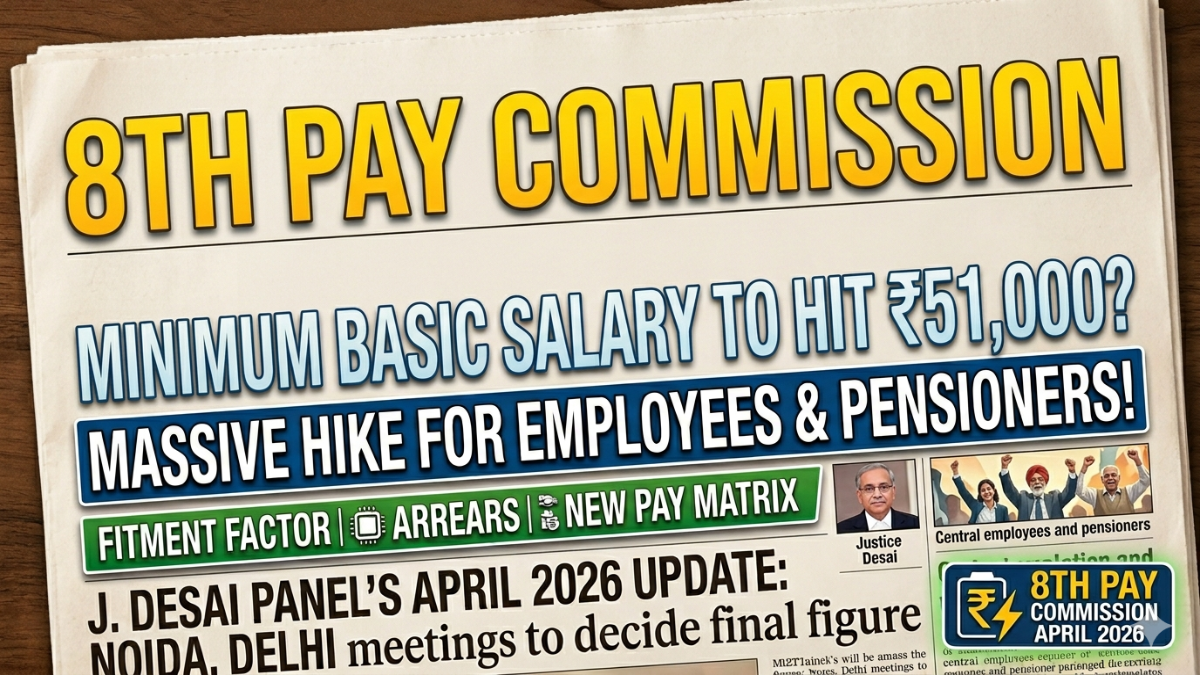
When Will the Money Hit Your Account?
Now for the reality check. While the “reference date” for the 8th Pay Commission is January 1, 2026, don’t expect a salary hike in next month’s pay slip. The commission has a massive task ahead and typically takes 18 to 24 months to submit a final report.
Realistically, we are looking at a full implementation in late 2026 or early 2027. The good news? The Indian government almost always pays arrears. So, even if the notification comes in 2027, you will likely receive a handsome lump sum covering the period from January 2026 onwards.
What Should You Do Now?
For central employees in Noida, Delhi, and across India, the advice is to stay informed but stay patient. If you are part of a union, ensure your memorandum is submitted via the official portal (8cpc.gov.in) before the April 30, 2026 deadline. This is a once-in-a-decade opportunity to shape the financial future of the Indian workforce.